
Between Defacement and Expression: The Dual Nature of Graffiti
January 17, 2026 Uncategorized 0 comment jgoulet27


Every time I have ever walked down a city street, I start to think about the wild, bright colors covering the walls. Sometimes the designs took my breath; other times, I’ll admit, it’s more like someone scribbled their nickname and ran-off. So I understand why the question comes up: is graffiti art, or is it just vandalism?. Graffiti can and should be considered an art form—because it’s complicated by how and where it appears.
First, let’s discuss what makes something art in the first place. When I look at a carefully designed mural—a whole wall transformed by both intention and color—it’s impossible for me to say that it’s not art. The article “Graffiti as Art” shows and asserts that, “larger pieces require planning and imagination and contain artistic elements like color and composition” (“Graffiti as Art”). That’s not very different from what any painter or sculptor does, right? The piece goes deeper, stating, “The artist’s intention is to produce a work of art, and that must be taken into account when considering street art’s legitimacy” (“Graffiti as Art”). For me, if the intention is creative—if the piece is meant to express, inspire, or provoke—then we have to at least validate it as art.

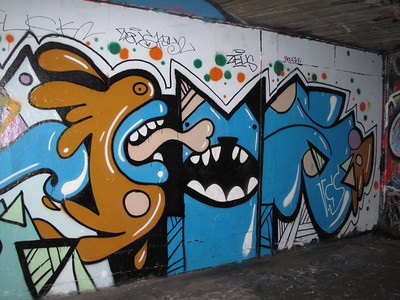
I know not all graffiti is the same. Sometimes, it really is just someone’s tag sprayed on a stop sign, which doesn’t feel as valuable as a detailed mural. Steve Dolan, in “Is Graffiti Art?”, makes this distinction crystal clear: “Some is simply a monochrome collection of letters, known as a tag, with little artistic merit…there are bigger, more accomplished examples that appear on larger spaces, such as walls. These are often multicolored and complex in design, and so start to push the boundary of whether they should really be defined as graffiti art” (Dolan). The skill and style involved in some graffiti cannot be ignored just because of its medium.
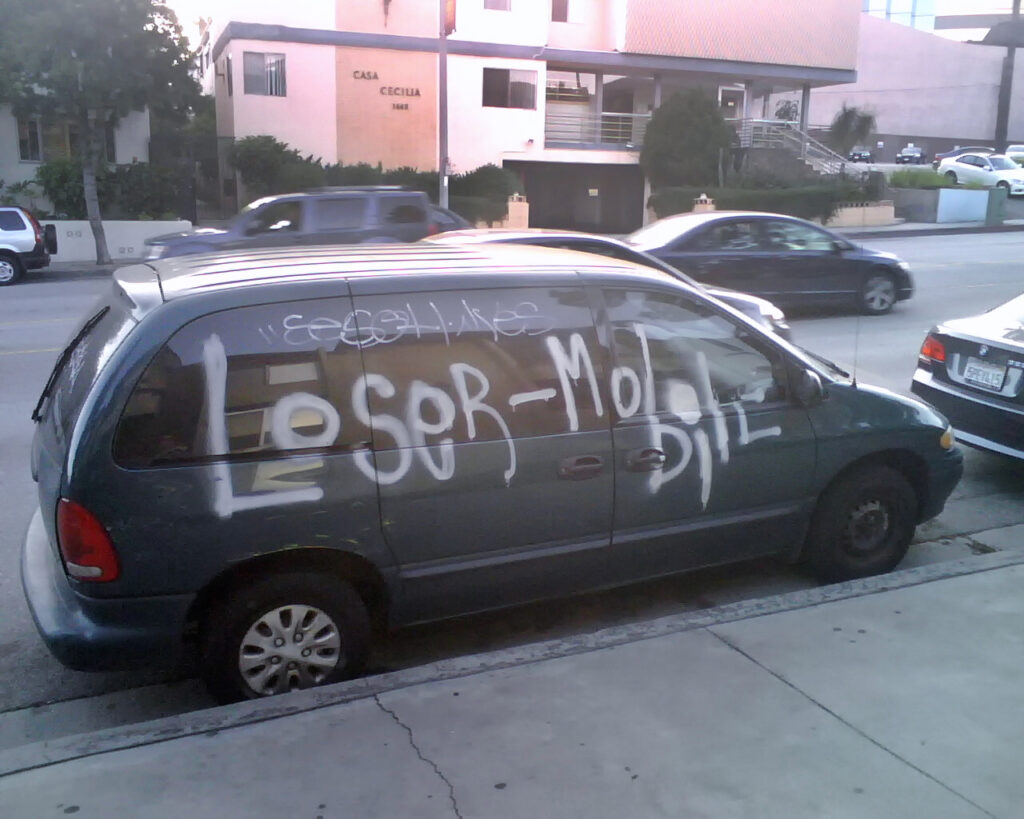
Thus, we can’t ignore the bigger problem: a lot of graffiti is painted on property without permission. And that, by definition, makes it vandalism in the eyes of the law. “Graffiti as Vandalism” is all about the financial and social costs: “The cost for cleanup in the U.S. has not been documented definitively, but it is safe to assume that it is in the billions of dollars” (“Graffiti as Vandalism”). Not only does that affect taxpayers, but the piece adds that “graffiti vandals often shoplift their materials, according to the U.S. Department of Justice” (“Graffiti as Vandalism”) Beyond the money, I understand why people would be angry after finding that their property was painted without permission. Nobody wants to walk outside to see their garage door suddenly covered with spray paint.
But I don’t think that means we should write off all graffiti as pure destruction and a form of chaos. Maybe, as Dolan suggests, there’s a good solution: “Maybe if some of the people behind the graffiti art were taken in hand and trained, they could use their artistic skills in more productive ways…Graffiti artists can create sanctioned murals for private property owners and get paid for it” (Dolan). Why can’t cities offer spaces for this kind of artistic expression? We see how legal murals bring neighborhoods together, often turning blocks from “bad neighborhoods” into open-air galleries. Some of the world’s most famous artists, like Banksy, started with graffiti—and their work, as “Graffiti as Art” notes, “has been shown in various galleries in New York and London, and artists are often commissioned to do legal murals and other work for art shows” (“Graffiti as Art”).
All in all, I think that graffiti is art at its heart, but where it’s placed often makes it illegal. Maybe the answer isn’t to get rid of it all, but, instead to find ways for artists to express themselves without hurting others or breaking the law. If we do that, maybe we’ll find more beauty out in the open—and less reason to call it vandalism at all.
Works Cited:
Dolan, Steve. “Is Graffiti Art?” Learn Religions, Dotdash Meredith, updated 25 July 2019, https://www.learnreligions.com/is-graffiti-art -700724.
“Graffiti as Art.” LoveToKnow, https://visual-arts.lovetoknow.com/visual-arts/graffiti-as-art
“Graffiti as Vandalism.” LoveToKnow, https://visual-arts.lovetoknow.com/visual-arts/graffiti-as-vandalism
“graffiti, Southbank” by duncan is licensed under CC BY-NC 2.0.
“Loser Mobile Vandal Graffiti, Hollywood” by Tim-desser is marked with CC0 1.0.
“graffiti of cow bones in st kilda” by ajfisher.td is licensed under CC BY-NC-SA 2.0.